
Types of AI in 2026: Finding Your Perfect AI
Just a year or two ago, when we thought of artificial intelligence, we only pictured ChatGPT—a "chatbot that talks well". But in 2026, types of AI have become countless, and their capabilities vary dramatically. Some tools write content, others create cinematic videos, and some handle complex Excel tasks on our behalf.
AI services have become specialized and sophisticated. Rather than blindly using popular mainstream tools, it's now crucial to select the right AI optimized for your specific needs. To do this effectively, you need to understand the overall landscape of AI services available in 2026.
In this guide, we'll break down the complex world of AI types into 4 core categories, explaining what each means and providing clear examples of each.
![[2026 AI 기초 | 1편] 복잡한 AI 생태계 한번에 이해하기 | ChatGPT, 나노바나나, Notion AI, Copilot 어떻게 다를까?](https://studio.bloomeraldcity.com/wp-content/uploads/2026/02/image-1-1024x628.png "[AI Basics 2026 | Ep.1] AI Ecosystem Guide: Comparing ChatGPT, NanoBanana, Notion AI, and Copilot")
1. Foundation Models & LLMs (Large Language Models)
The foundation of modern AI is generative AI, particularly LLMs (Large Language Models). These serve as the "brain" that understands human language and performs logical reasoning, with a key characteristic of being text-based.
- Definition: Models trained on massive text datasets that can converse like humans, summarize information, and write creative content.
- Key Examples:
- ChatGPT (OpenAI): The standard model with the most powerful general reasoning abilities.
- Claude (Anthropic): Specialized in highly readable, ethical, and human-like writing style.
- Gemini (Google): Leverages Google's vast ecosystem data in real-time.
우리가 흔히 쓰는 ‘챗봇’ 서비스들이 대부분 이 카테고리에 속합니다. 복잡한 문제를 풀거나 리포트 초안을 잡을 때 가장 먼저 찾아야 할 도구입니다.
2. Multimodal AI Platforms
The most striking advancement in AI trends in 2026 is "multimodal" capability. While LLMs only understood text (language), multimodal AI processes various sensory inputs simultaneously—images, voice, video, and more.
- Definition: AI that supports "multiple modes," such as generating images from text, explaining video content, or creating music.
- Key Examples:
For designers, YouTubers, and marketers, these are no longer optional—they're essential AI tools. AI 도구들입니다.
3. Vertical & Application-Specific AI
These are customized versions of the "brain (LLM)" or multimodal capabilities mentioned above, tailored for specific software or business purposes.
- Definition: Definition: Rather than using general-purpose AI as-is, these are customized for specific industries (healthcare, law, education) or specific tools (note-taking, collaboration platforms).
- Characteristics: Combine LLM's reasoning power with multimodal generation capabilities.
- Key Examples:
- Notion AI: Work-optimized AI that integrates LLM and image generation capabilities within the writing environment.
- 클로바노트 (ClovaNote): ClovaNote: Specialized AI for meeting minutes that integrates speech recognition (audio) and content summarization (language).
- Canva Magic Studio: Design-specialized AI that integrates image generation and editing features within the design tool.
4. Agentic AI
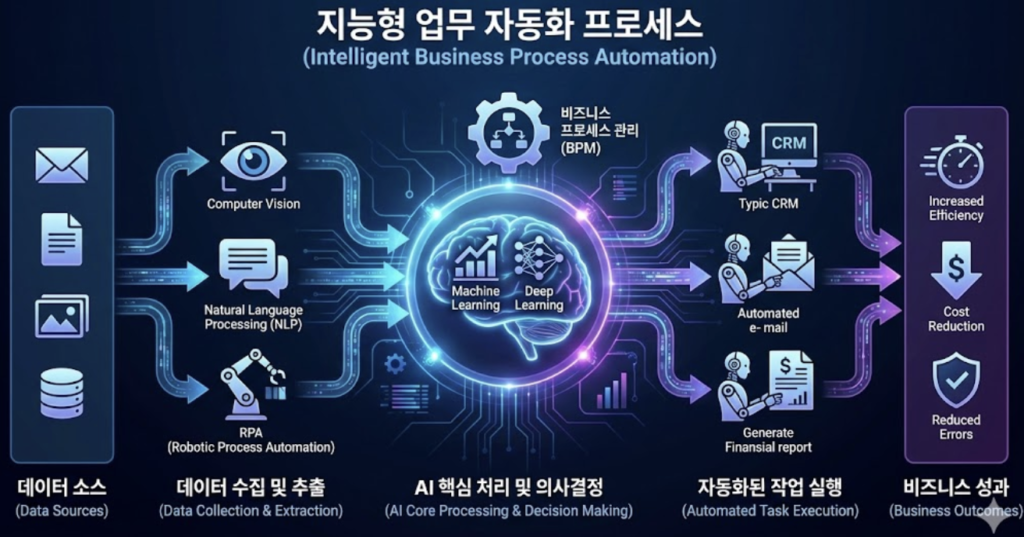
2026년 인공지능의 최종 진화 형태입니다. 시키는 말에 대답만 하는 것을 넘어, 목표를 달성하기 위해 ‘행동’까지 책임집니다.
- Definition: 사용자의 명령을 실행하기 위해 웹 브라우징을 하고, 파일을 다운로드하며, 이메일을 보내는 등 자율적으로 행동하는 AI입니다.
- 예를 들어, 사용자가 “이번 달 매출 보고서 써줘“라고 하면, 스스로 데이터를 찾고(LLM), 그래프를 그리고(멀티모달), 팀원들에게 메일까지 발송(에이전트)하는 자율형 AI입니다.
- Key Examples:
- Microsoft Copilot Agents: Business agents that autonomously execute corporate business processes.
- AutoGPT / BabyAGI: Autonomous AI that breaks down complex goals and solves them step-by-step.
단순한 도구를 넘어 ‘디지털 직원’의 역할을 수행하는 단계라고 볼 수 있습니다.
개인경험: 나만의 AI ‘어벤져스’ 팀을 구성하는 법
Initially, I tried to solve everything with just ChatGPT. But I couldn't always get satisfactory results.
Now I use different tools for different situations. For general conversations, I use ChatGPT, but for in-depth dialogue, I turn to paid versions of Claude or Gemini. For meeting notes, I use Notion AI. For image generation, I use tools like Midjourney, and for workflow automation, I leverage AI agents.
By categorizing tools by purpose, my work efficiency improved and the quality of outputs significantly increased.
However, subscribing to all these services can be expensive. It's important to decide which to use as paid vs. free versions, and which service is optimal for each situation. I'll cover this in future posts.
마치며: 이제는 도구가 아니라 ‘조합’의 시대
While the variety of AI services in 2026 is vast, it ultimately comes down to how foundation technologies (LLM, multimodal) are implemented into application services (vertical, agentic).
Rather than searching for one all-powerful AI, I encourage you to deploy AI specialists best suited to your daily life and work to create your own personalized workflow.
Next Post Preview
In this post, we’ve explored the overarching landscape of the AI ecosystem. Now that we have the big picture, it’s time to dive deeper into the core: Large Language Models (LLMs). In the next episode, I’ll provide a comprehensive comparison of the '2026 AI Big 3: ChatGPT vs. Claude vs. Gemini' tailored to specific professional situations!
📍Read Next Post
🔗 [AI Basics 2026 | Ep.2] ChatGPT vs. Gemini vs. Claude: A Comprehensive Comparison | Differences and Selection Guide
![[2026 AI 기초 | 2편] ChatGPT vs Gemini vs Claude 완벽 비교 | 3대 LLM 차이점과 선택 가이드](https://studio.bloomeraldcity.com/wp-content/uploads/2026/02/image-7-300x146.png "[AI Basics 2026 | Ep.2] ChatGPT vs. Gemini vs. Claude: A Comprehensive Comparison | Differences and Selection Guide")
![[2026 AI 기초 | 3편] 나에게 맞는 AI 찾기 | 직장인 8가지 업무 상황별 ChatGPT Claude Gemini 비교 시작](https://studio.bloomeraldcity.com/wp-content/uploads/2026/02/image-10-300x121.png "[2026 AI 기초 | 3편] 나에게 맞는 AI 찾기 | 직장인 8가지 업무 상황별 ChatGPT Claude Gemini 비교 시작")